Check the assumptions behind a rental-property purchase
A rental-property projection can look convincing while several of its inputs are still uncertain. The purchase price may be agreed, but the rent, work required, financing and later refinance may need further investigation.
In the archived Adapt & Thrive interview, Dalia Barsoum and Chris Shebib discuss examining a property through its income, costs and financing. A purchase assessment needs to show which figures are established and how lower income, higher costs or delayed funding would affect the result.
Distinguish confirmed information from projections
Start with the source behind each figure. Is the rent supported by current leases, an asking rent or an estimate after work? Is the renovation amount a quote for the intended scope? Are the financing terms an actual proposal or a rate entered to complete the spreadsheet?
Keep those differences visible. A forecast is easier to examine when it shows which inputs are established and which still need checking.
Part of the proposed purchase | Question to resolve |
|---|---|
Property income | What supports the rent and the date you expect to receive it? |
Operating costs | Which ongoing and irregular expenses are included, and where did the amounts come from? |
Work required | What scope, cost and completion time does the plan assume? |
Financing | What funds, costs, payments and conditions have actually been discussed? |
A later sale or refinance | What must happen before it could release the funds the plan relies on? |
Use one consistent period when comparing recurring income and costs. Keep the initial purchase funds and project spending visible separately, so they do not disappear behind a monthly surplus.
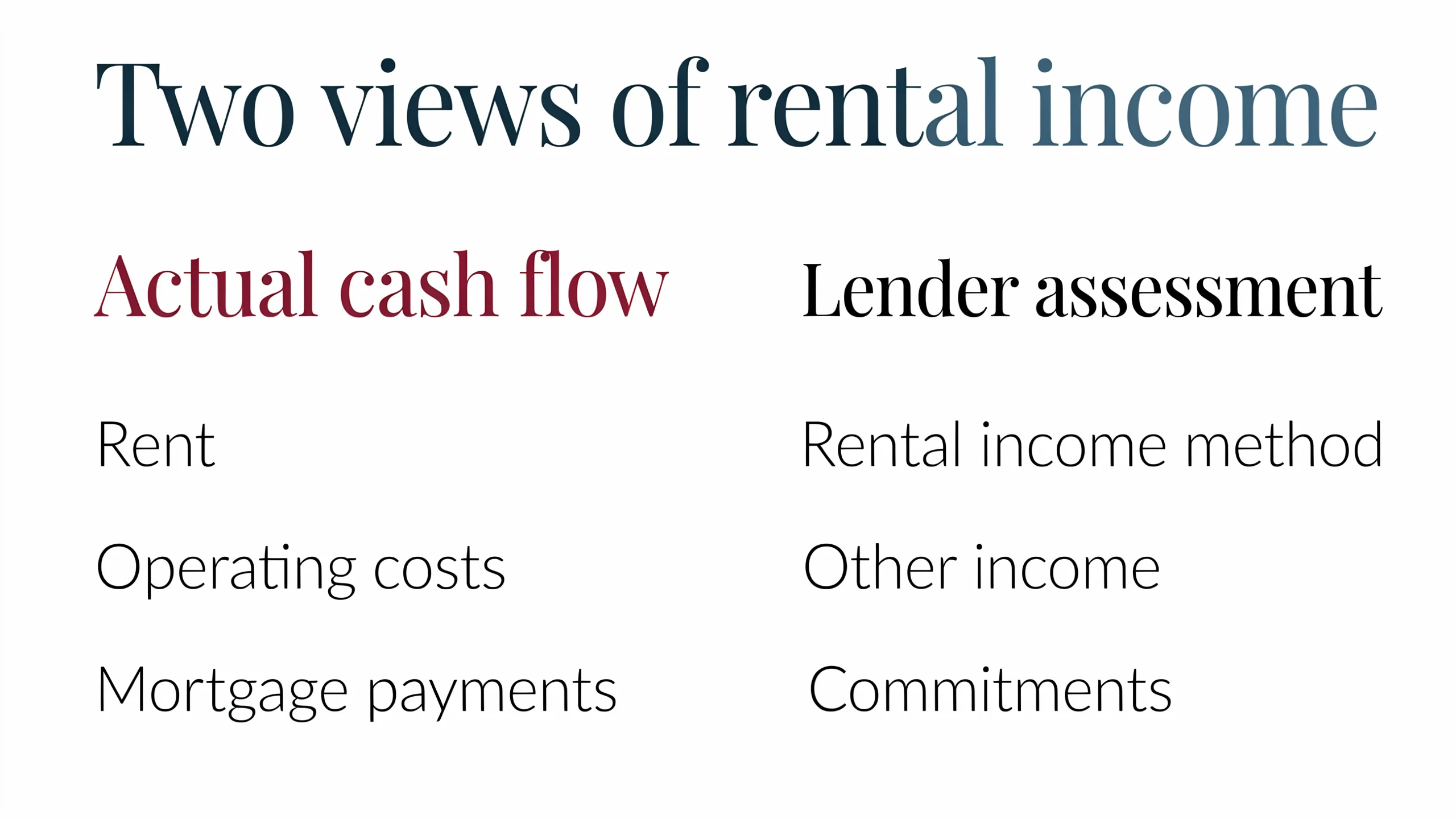
A lender’s treatment of rental income is not a universal percentage or an estimate of borrowing capacity.
Read the graphic description
A cash-flow review considers rent, operating costs and payments. A lender assessment considers its rental-income method, other income, mortgages and debts. A cash-flow result is not a mortgage approval.
Test how lower income, higher costs and delays affect the purchase
Work through a less favourable version of the plan. Rent might arrive later or be lower than expected. A repair may cost more, or the financing payment may differ from the first estimate.
Examine the changes together as well as one at a time. A project taking longer can mean both additional costs and a longer wait for income. Ask what funds would carry the property in that period and which existing property expenses or projects already rely on those funds.
Testing these changes reveals which assumptions need evidence and which possible shortfalls need a funding plan.
Separate rental cash flow from principal repayment and future value

Principal repayment and a future increase in property value are different from cash available to make the next payment. Do not count an expected increase in value as income that carries the property today.
If the plan includes refinancing after improvements, identify the value, income and financing assumptions behind that step. Ask what you would do if the resulting funds were lower or arrived later. A projected refinance is not an arranged source of funds.
The rental-property reserves guide helps distinguish cash already set aside from approved borrowing and future transactions.
Assess the mortgage alongside the property’s operating costs
A mortgage discussion considers your circumstances, objectives, obligations and the property offered as security. A lender's commitment may have conditions that must be met before funding. Read what has been approved and what remains outstanding with your mortgage professional.
That financing assessment does not replace your review of the property's operating plan. Nor does a promising projection establish that the required loan will be available.
Review the purchase alongside your existing properties
A new purchase may use cash or borrowing capacity that your existing properties also need. Bring the proposed property’s income and costs, required work, purchase date and funding sources to the review so Streetwise can assess the financing alongside the properties you already own.
Explore Streetwise's investor financing advice or discuss a Financing Roadmap™. The complimentary Roadmap starts with your short- and long-term goals, reviews your financial circumstances and property plans, then explains financing recommendations and the steps to pursue them.
Watch the original interview
Adapt & Thrive: Expert Interview with Chris Shebib
The recording includes Chris’s strategy preferences and operational suggestions from 2022. Its historical price movements, rent commentary and projected values do not establish current rules or expected investment results.